

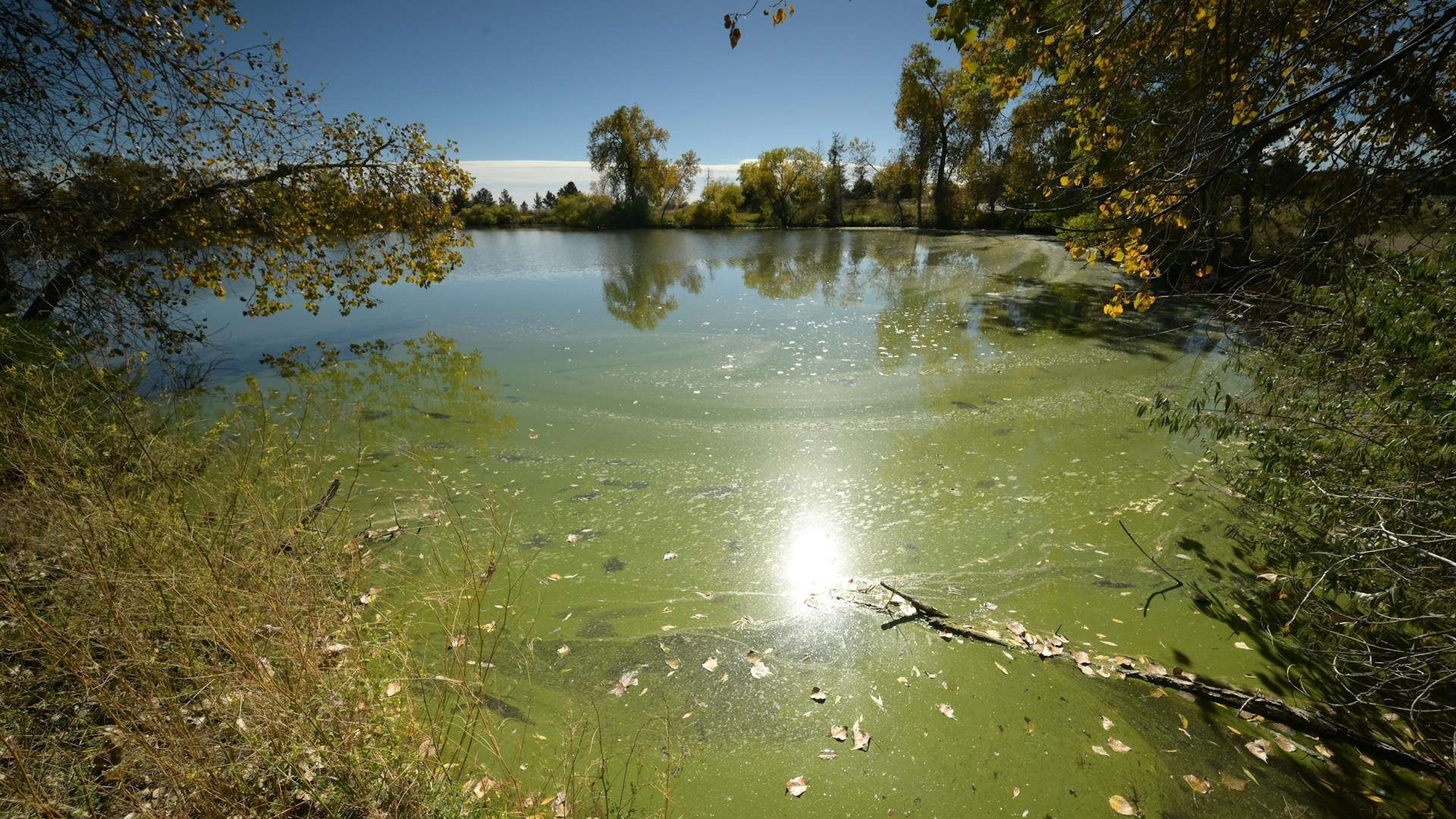
What causes bad smells in ponds, lakes or dams?
Bad smells in ponds, lakes and dams are usually caused by low oxygen levels. When water becomes stagnant, organic material such as leaves, grass, algae and waste begins to break down without enough oxygen. This process is known as anaerobic decomposition, and it produces unpleasant gases that cause strong odours.
In healthy water, beneficial bacteria break down waste using oxygen. When oxygen is limited, harmful bacteria take over and create conditions that lead to foul smells and poor water quality.
Why do smells in ponds, lakes and dams get worse in warmer weather?
Warm water holds less dissolved oxygen than cool water. At the same time, biological activity increases as temperatures rise. This combination accelerates the breakdown of organic matter and increases the demand for oxygen.
This is why many people notice water quality issues becoming more severe during summer, particularly in shallow or sheltered dams and ponds.
How can I reduce odour naturally?
One of the most effective long-term solutions is aeration. Aeration introduces oxygen into the water and creates circulation that supports healthy biological processes.
By improving oxygen levels, aeration helps restore balance in the water, reduces the activity of odour producing bacteria and supports clearer, healthier conditions without relying on chemical
Discover how Otterbine aeration systems help eliminate odour and restore healthy water conditions in ponds, lakes and dams. Learn more at https://otterbineaustralia.com.au