

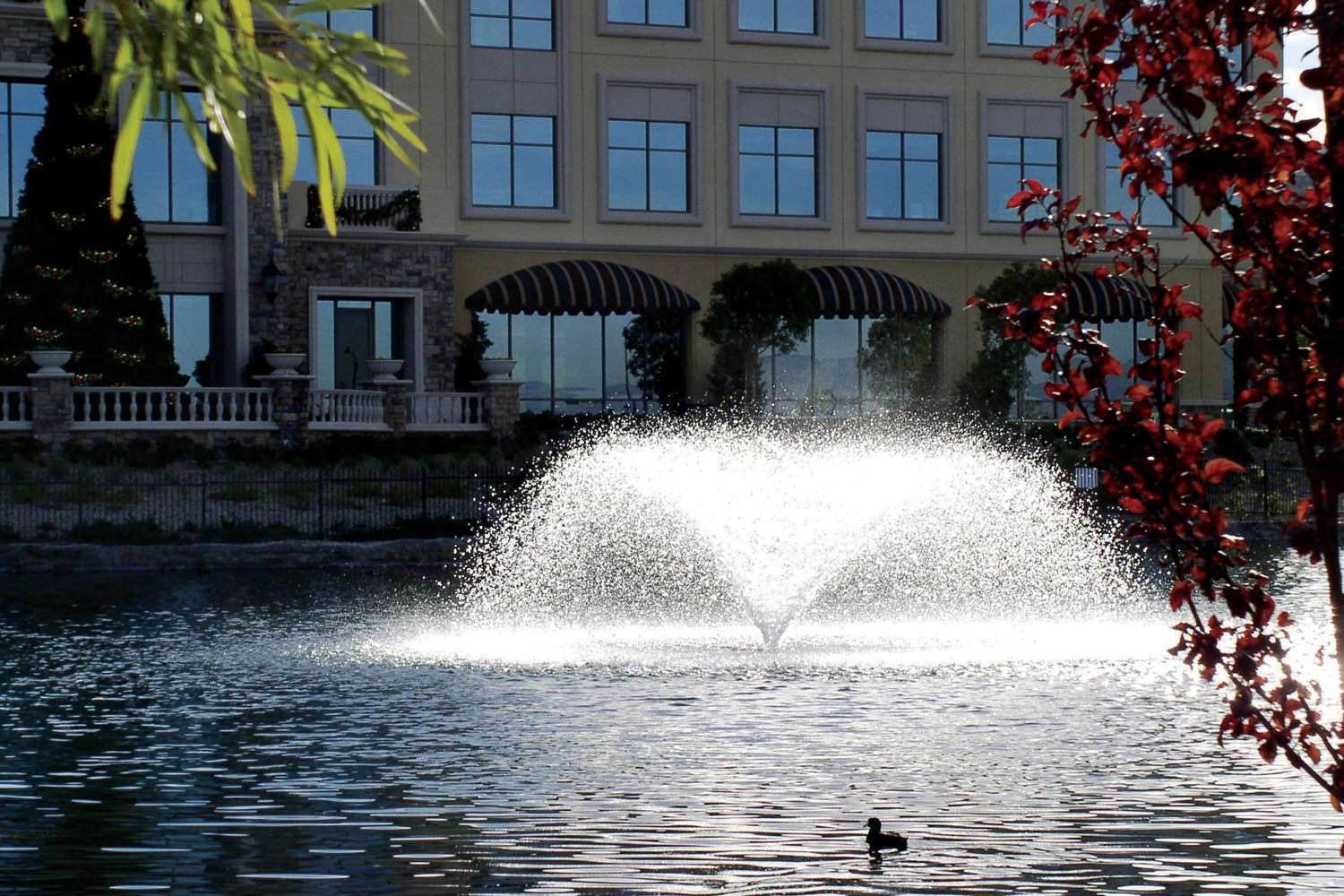
Aeration systems are designed to move and mix water in different ways. The best option depends on whether you want a decorative display, surface circulation, deeper-water mixing or a combination of outcomes. Understanding the differences helps you shortlist suitable equipment before investing.
Surface aerators
Surface systems agitate water at or near the surface and can create visible movement. Their suitability depends on operating depth, the water body’s shape and the performance needed. They may be considered for ponds where surface circulation is useful, but do not assume every surface unit is suitable for every depth.
Subsurface aeration
Subsurface systems typically introduce air below the surface, creating rising bubbles and water movement. They are often considered for deeper water bodies where managing stratification and circulation is important. System design, depth, diffuser placement and the water body’s oxygen demand all affect performance.
Aerating fountains
Aerating fountains combine a visible fountain pattern with water movement and oxygen transfer. They can provide a strong visual feature in parks, golf courses, estates and commercial landscapes. Their performance and minimum operating depth vary by model, so check the product specifications and site conditions.
At-a-glance comparison
The table below is a general guide. Actual energy use, maintenance and oxygen-transfer performance depend on the specific model and installation.
Can systems be combined?
Yes. A fountain may meet an aesthetic goal while a separate subsurface system addresses deeper-water circulation. Whether this is worthwhile depends on the site, budget, power supply and required water-quality outcomes. Avoid buying two systems before defining the problem each one is intended to solve.
Look for performance evidence
Otterbine states that it independently tests and publishes oxygen-transfer and pumping rates for its aeration systems. When comparing equipment, review the relevant model data and confirm how the test results apply to your site rather than relying on broad claims alone.
At-a-glance comparison
This is a general guide. Actual energy use, maintenance and oxygen-transfer performance depend on the model and installation.
System type | Often considered for | Visual impact | Key checks |
|---|---|---|---|
Surface aerator | Surface movement and circulation | Visible surface agitation | Operating depth, circulation pattern, power and safety |
Subsurface aeration | Deeper water and circulation goals | Usually little or no fountain display | Depth profile, diffuser layout, air delivery and oxygen demand |
Aerating fountain | Water quality support plus decorative display | High | Pattern, operating depth, tested performance, power and lighting |
Frequently asked questions
Have another question? Explore our pond and lake aeration FAQs.
Next Steps:
Explore Otterbine Aerating Fountains and Subsurface Aeration, or contact our team to discuss suitable options for your water body.

