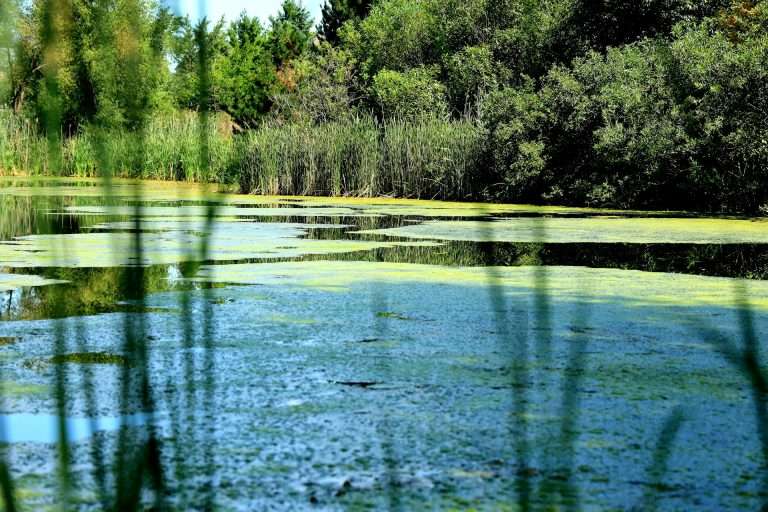
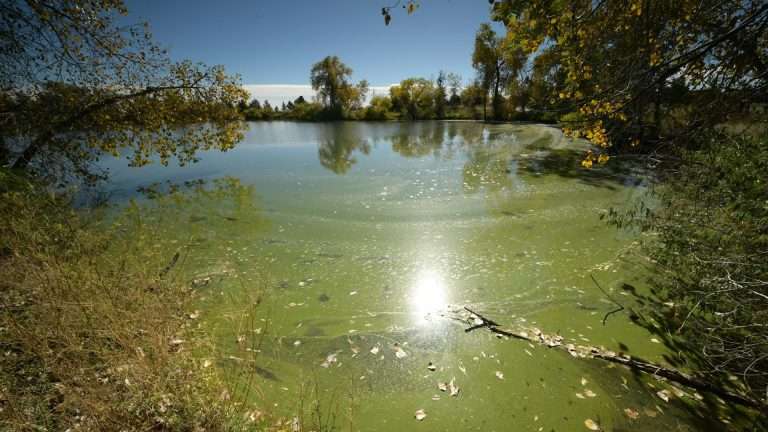
Blue-green algae, also called cyanobacteria, can develop rapidly in warm, nutrient-rich and still water. Some types produce toxins that can harm livestock, wildlife and people. You cannot reliably tell whether a bloom is toxic just by looking at it, so treat suspected blooms seriously and prioritise official advice and water testing over equipment changes.
What is blue-green algae?
Despite the common name, cyanobacteria are bacteria that photosynthesise, rather than the same type of organism as ordinary green algae. A bloom may appear as a paint-like scum or floating flecks. Colours can include vivid green, blue-green, khaki, brown or whitish tones as a bloom changes or breaks down. Some blooms have an earthy or rotting smell, but neither colour nor smell can confirm whether toxins are present.
What should I do if I suspect a bloom?
Immediately keep livestock away from the affected dam and provide an alternative supply of clean, safe drinking water. Do not rely on visual inspection to decide the water is safe. Arrange testing through an appropriately accredited water-quality laboratory and follow advice from your state agriculture department, local authorities or veterinarian. If animals may have been exposed or show signs of illness, contact a veterinarian urgently. Avoid disturbing the scum or attempting an improvised treatment.
Can aeration fix an active toxic bloom?
Do not treat aeration as an emergency cure for a suspected toxic bloom. Aeration and circulation may be useful components of longer-term water management, but they do not prove that water is safe or remove the need for testing. Disturbing water or changing conditions without a plan may also complicate management. Follow official advice first and only return to using the water when appropriate testing and authorities indicate it is safe.
How can farm dams reduce the risk of future blooms?
Limit nutrients entering the dam. Maintain vegetated buffer strips, control erosion, avoid applying fertiliser close to drainage lines and keep manure and sediment-laden runoff out of the water. Where practical, manage stock access and provide off-dam troughs. Shade and gentle mixing may help reduce some bloom-favouring conditions, but the best combination depends on dam depth, shape, water use and local conditions. A properly selected aeration system may help manage stratification and water quality as part of a wider plan.
Frequently asked questions
Have another question? Explore our pond and lake aeration FAQs.
Next Steps:
Aeration can form part of a longer-term dam management plan. For a farm dam assessment and suitable Otterbine options, contact the team.